Jerry Avorn, MD, NaRCAD Co-Director
Tags: Detailing Visits, Jerry Avorn, Training Often, in discussing academic detailing programs with current or potential sponsors, the question comes up: “Wouldn’t it be cheaper just to deliver the message to a whole group of clinicians at once, instead of the much more cumbersome process of talking to prescribers one at a time?” Sure, it would be cheaper. So would just mailing (or e-mailing) memos to people telling them what to do, or requiring time-consuming groveling on 1-800-DROP-DEAD prior authorization numbers before a costly resource can be ordered. The problem is that cheaper solutions often don’t work, or don’t work well. We have decades of proof that putting health care professionals together in a darkened auditorium and subjecting them to a PowerPoint Tolerance Test does not reliably change behavior. The main reason that academic detailing relies on one-on-one interactive communication is that it is the best way for the outreach educator to accomplish several key goals:
Well-trained academic detailers understand this, and they use the interactivity to craft a real-time, care-improvement message that best addresses the learning needs (and attitudes and biases!) of the person they’re visiting. Less competent academic detailers force their “targets” to sit still while they administer a canned micro-lecture monologue, which works poorly. They may feel they “got through all the points” they wanted to cover, but if there was no interactivity, no conversation, then the person they were talking at might as well have been falling asleep in a darkened amphitheatre. We know this is the case from decades of experience and scores of randomized controlled trials. We also know, perhaps most compellingly, that when the drug industry wants to change what we know and about its products, it sends people to our offices to talk with us—it doesn’t rely only on the less expensive modalities of mailings, e-messages, and sponsored lectures. So the next time someone suggests that it might be more inexpensive to just gather prescribers into a big room and have someone talk at them for an hour, agree with them. Then point out that it’s also less time-intensive to scarf down a Big Mac than eat a real meal, shoot off a series of emoticons rather than a personalized note, or listen to a ring tone of a Beethoven sonata rather than hear it performed by musicians. Cheaper isn’t everything. Jerry Avorn, MD, NaRCAD Co-Director
Tags: Detailing Visits, Health Policy, Jerry Avorn, Medications For over a century, appropriate medication use in the U.S. has relied heavily on the regulation of what manufacturers can say about their products. One of the first powers given to the Food and Drug Administration when it was created in 1906 was the ability to require that makers of “patent medicines” state what was actually in their products. (Often, it was a mixture of ineffective ingredients laced with alcohol or opium, but accurate information was a start.) Over time, the agency was granted the authority to regulate claims about efficacy and safety that companies made about prescription drugs. This has begun to change, with potentially important implications for academic detailing. Currently drug manufacturers promoting their medications to clinicians are limited to discussing indications for which they have obtained approval from FDA, Last year, however, FDA announced its openness to considering policies to make it easier for drug manufacturers to present doctors with their own views about off-label uses of their products that FDA did not consider appropriate. A follow-up “draft guidance” would similarly open the door for manufacturers to provide information about side effects that differs from the determinations of FDA scientists and outside advisers. Most recently, the agency has revealed plans for a national conference on whether limiting drug-makers’ promotional statements might infringe on these companies’ corporate free speech rights. And a bill that has progressed through Congress, The 21st Century Cures Act, will make it easier for drugs to be approved on the basis of looser standards, including lab tests or other surrogate measures of efficacy rather than actual patient outcomes. These developments will have important implications for academic detailing. If we are entering a period of lessened government regulation of what pharmaceutical manufacturers are permitted to tell prescribers about off-label uses of their products, or their safety profiles, there will be an even greater need for balanced, evidence-based communication to inform medication use decisions. Just as travelers to developing countries that have polluted water supplies often prefer to drink bottled water, clinicians may increasingly feel the need for access to non-contaminated information sources if they can’t be sure what’s coming out of an increasingly de-regulated informational tap. All of us concerned with optimal use of medications will need to monitor these developments closely. If the proposed changes prevent FDA from regulating the promotional claims made by drug manufacturers as closely as in the past, then health care systems and individual practitioners will have increasingly greater need for the more reliable sources of information that academic detailing services can provide. Stay tuned. 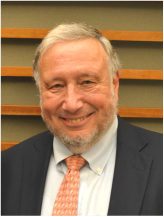 by Jerry Avorn, M.D., NaRCAD Co-Director
Tags: Health Policy, Jerry Avorn, Medications A number of academic detailing programs began in the 1990s or early 2000s, when the cost of many useful medications in primary care was prohibitive. Some were available then only as expensive brand-name products: clopidogrel (Plavix) as an anti-platelet agent, alendronate (Fosamax) for osteoporosis. Others could plausibly be replaced in some patients by similar agents in the same class: atorvastatin (Lipitor) for elevated cholesterol, celecoxib (Celebrex) for arthritis and pain, omeprazole and esomeprazole (Prilosec and Nexium) for acid-peptic disease. Then came the game-changing developments around 2011-2012, when the patents on blockbuster drugs like Lipitor and Plavix expired. This was referred to as the “patent cliff” by some; others dubbed it “Pharmageddon.” Meanwhile, discount drug stores, led by Wal-Mart, had been introducing the $4-a-month generic prescription. Within a short period of time, most common drug categories had one or more key medications available that made it possible to manage many common primary care problems—hypertension, high cholesterol, diabetes—for a modest monthly cost. While these developments were a boon to patients and payors, they were not good news for the large pharma companies, which had to reassess their business models in the post-blockbuster era. But Pharmageddon also had an impact on another, much smaller group: the tiny international academic detailing community. Many sponsors of academic detailing programs had been attracted by the prospect that promoting evidence-based practice could also help contain rising drug costs. While that was never the main goal of such work for many of us, it was an attractive feature—at least in part—for many funders in both the public and private sectors. Stark evidence of this came in a conversation I had with a health insurance executive about the possibility of starting an academic detailing program for primary care providers. “Frankly,” he told me, “we’re not focusing much attention any more on drugs in primary care. Many of them are pretty cheap now. All our energies are going to the expensive specialty drugs.” I guess if the bottom line is all that matters, any M.B.A. would come to the same conclusion about academic detailing in primary care. However, if the mission of academic detailing is to help health care professionals take better care of their patients, then the goal of quality improvement serves as reason enough in itself. Several state government agencies get this (PA, SC, VT, MA, etc.), as do some Canadian provinces and other nations. But in many private U.S. health care systems, the bottom line still rules. Luckily, things are changing yet again to make academic detailing potentially attractive even for those whose focus is mostly on finances. Growing impact of the HEDIS measures (Healthcare Effectiveness Data and Information Set) and the Medicare “stars” rating system means that millions of dollars of reimbursement now depend on how a health care system performs on several quality measures. Many of these measures depend upon optimal medication use for conditions such as diabetes, hypertension osteoporosis, and elevated cholesterol; others assess cancer screening and other non-medication-related priorities that can be addressed by academic detailers. So for those of us who always felt that academic detailing is about optimizing patient care, that goal remains as important as ever. And for those who are concerned with how academic detailing can affect a health care system’s bottom line, even though Pharmageddon temporarily took the edge off some of those concerns in primary care, the renewed focus on outcomes and quality measures, many of which are so drug-dependent, means that this reason to improve prescribing is also now back on the table. About the Author: Dr. Jerry Avorn is Professor of Medicine at Harvard Medical School and Chief of the Division of Pharmacoepidemiology and Pharmacoeconomics. A general internist and geriatrician, he pioneered the concept of academic detailing and is recognized internationally as a leading expert on this topic and on optimal medication use, particularly in the elderly. Dr. Avorn has published over 250 papers on these topics over the past three decades. This article originally appeared in NaRCAD’s Winter 2014/15 Newsletter.  by Arielle Mather, MPH, Education & Training Manager
Tags: Conference, International, Jerry Avorn, Opioid Safety On November 13th and 14th, 2014 NaRCAD hosted the Second International Conference on Academic Detailing. The focus of this year’s conference was on educational outreach in an era of rapid health care reform, with perspectives from prominent figures in government, research, and business. The conference explored a pressing clinical theme on each day, including presentations of academic detailing programs currently addressing these topics in the field. After Dr. Jerry Avorn, NaRCAD’s co-director, opened the conference with a review of the past, present, and future of academic detailing, Dr. Joshua Sharfstein, Maryland Secretary of the Department of Health and Mental Hygiene, discussed the challenges of improving health care and outcomes for the residents of his state. Jean Slutsky, Chief Engagement and Dissemination Officer of the Patient-Centered Outcomes Research Institute (PCORI) reviewed the key principles for effectively communicating research results that improve patient health outcomes. The clinical theme for Day 1 was prescription opioid use and overuse. Dr. Harry Chen, Vermont Secretary of the Agency of Human Services set the stage by reviewing the origins of current problems with opioid use and sharing details of his state’s initiatives for prescribing pain medication. This talk was followed by an interactive panel session that highlighted two academic detailing programs (in South Carolina and New Mexico) seeking to reduce opioid overuse and abuse. Small group breakout sessions allowed for more detailed conversation about these programs and other specific topics. Day 2 of the conference began with an overview of the business case for evidence based practice, presented by Dr. Troyen Brennan, Chief Medical Officer of CVS Health. Daniel Wolfson of the American Board of Internal Medicine Foundation, followed with a presentation on the Choosing Wisely campaign, which is designed to engage clinicians in the critical questions of how to make healthcare safer and more efficient. Dr. Alice Bonner of Northeastern University began the conversation of the day 2 clinical theme: antipsychotic medication use in long term care. After Dr. Bonner’s introduction, two ongoing academic detailing programs (in Massachusetts and Saskatchewan, Canada) aimed at addressing this problem shared their insights. The challenge of sustaining academic detailing programs was addressed by Frank May, who has successfully implemented programs in multiple settings internationally. Dr. Madeleine Biondolillo, Associate Commissioner at the Massachusetts Department of Public Health, made the final presentation, reviewing how academic detailing fits in with the other approaches that the state uses to improve health. In addition to the formal sessions, conference attendees from 15 US states, Canada, Europe, and Australia had a chance to interact informally, share ideas about academic detailing, and develop connections that will help support increased collaboration in the future. The third installment of this AHRQ funded conference series will be held next year in November 2015. Finalized dates and registration information will be announced in the coming months. If you would like specific slide sets from any of the conference presentations, please email us. |